Caregiver PTSD and trauma: what families should know
Years of caregiving, especially dementia caregiving, can leave real traumatic stress that lingers after it ends: intrusive memories, hypervigilance, broken sleep, avoidance, guilt, and grief. In one study, 35 percent of dementia caregivers showed elevated post-traumatic stress symptoms from caregiving (NIH/NCBI). This is common, it is not weakness, and help exists.
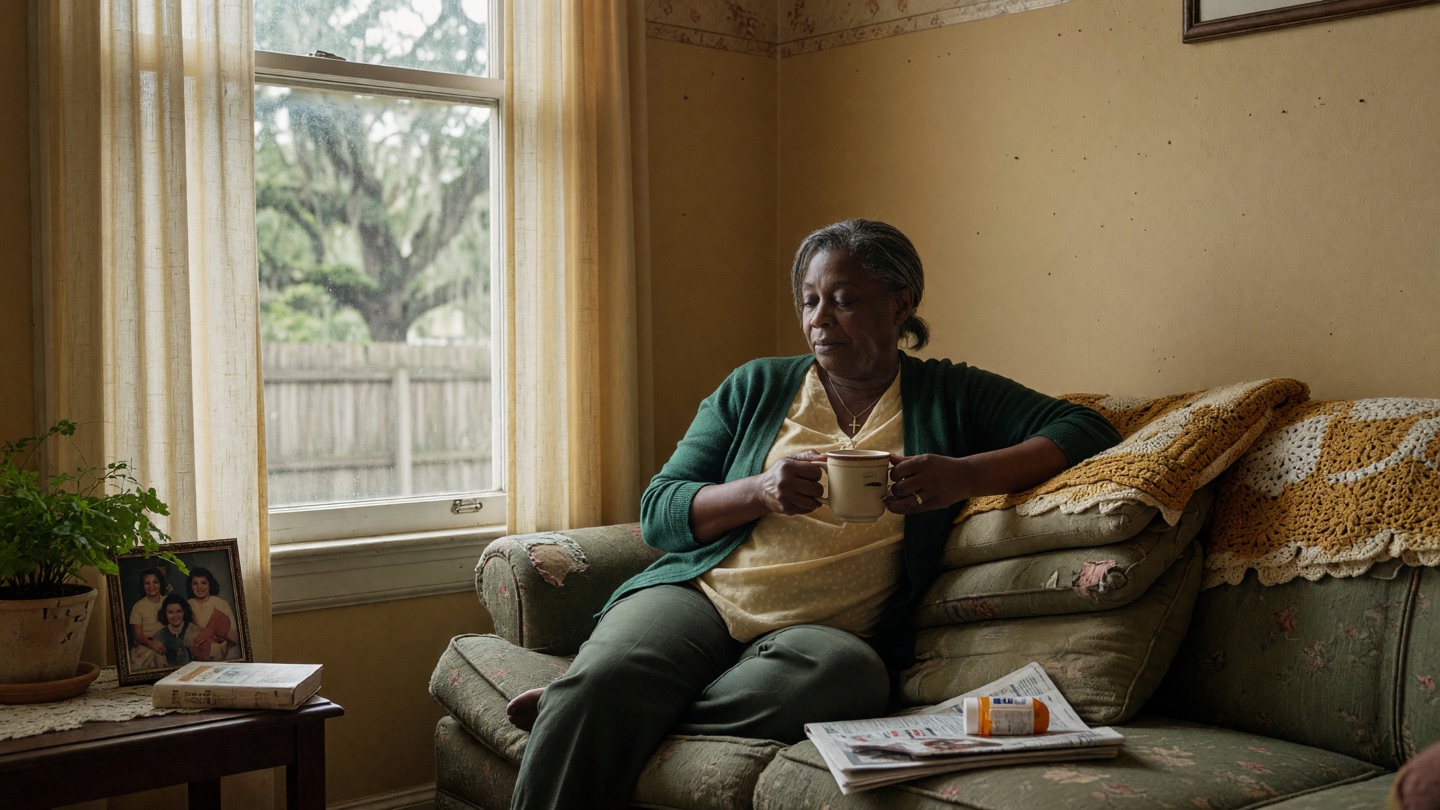
Years of caregiving, especially dementia caregiving, can leave real traumatic stress that lingers after it ends: intrusive memories, hypervigilance, broken sleep, avoidance, guilt, and grief. In one study, 35 percent of dementia caregivers showed elevated post-traumatic stress symptoms tied to caregiving (NIH/NCBI). This is common, it is not weakness, and help exists. Here is how to recognize it in yourself and where to turn.
Please read this first: This is general education, not medical advice, and it cannot diagnose anything. If you are having thoughts of suicide or cannot keep yourself safe, call or text 988 right now, or call 911. You matter as much as the person you have been caring for.
If you have cared for a parent through a long illness, and you find that the hard moments still play in your mind, that you cannot fully relax, or that you feel guilt and grief that will not settle, you are not imagining it and you are not weak. Caregiving can be one of the most loving things a person ever does, and it can also leave real marks on the mind and body. This guide names what many families feel but rarely say out loud.
Can caregiving really cause trauma or PTSD?
Yes, it can. Intense, prolonged caregiving, most of all years of dementia care, exposes a person to repeated frightening and helpless moments: a fall, a hospital dash, a parent who no longer knows you, aggression, wandering, the slow loss of the person you love. Over time that can produce genuine traumatic stress, and in one study 35 percent of dementia caregivers showed elevated post-traumatic stress symptoms tied to caregiving (NIH/NCBI).
Post-traumatic stress disorder, or PTSD, is a recognized condition that can follow experiences that felt frightening or out of control. The VA's National Center for PTSD notes that people caring for a loved one often carry heavy stress and neglect their own needs, and that caregiving-related events can trigger trauma responses (National Center for PTSD). Researchers also see meaningful links between long caregiving and lasting stress symptoms in older adults (National Center for PTSD). Only a licensed professional can diagnose PTSD. The point here is simpler and kinder: what you feel has a name, it is studied, and it is treatable.
How is this different from burnout and depression?
Let us be honest about the overlap, because these things tangle together. Caregiver burnout is deep exhaustion and depletion from unrelenting stress. Depression is persistent low mood, loss of interest, and hopelessness, and it is very common in this role: roughly 30 to 40 percent of dementia caregivers experience depression, far more than their peers who are not caregiving (Family Caregiver Alliance). Traumatic stress is a third thing again, the mind reacting to fear and helplessness rather than to fatigue alone.
The clearest difference is timing and shape. Burnout tends to ease once the load lifts. Trauma responses can persist, or even surface for the first time, after caregiving ends. And trauma has a recognizable pattern that plain tiredness does not:
- Re-experiencing: intrusive memories, nightmares, or vivid replays of a crisis or a hard death.
- Avoidance: steering clear of the hospital, the nursing home, certain rooms, photos, or conversations that bring it back.
- Hyperarousal: feeling constantly on guard, jumpy, irritable, unable to sleep or to sit still.
- Negative mood: numbness, detachment, and a heavy load of guilt and grief.
Many caregivers carry burnout, depression, and traumatic stress at the same time. You do not need to sort out which is which on your own. That is exactly what a doctor or therapist is for.
The health toll is real, and documented
None of this is in your head, and it is not a personal failing. Caregiving takes a measurable toll on health. More than 11 million Americans provide unpaid care for someone with dementia, giving about 18.4 billion hours of care in 2023, and they face greater risk of anxiety, depression, and poorer health than other caregivers (CDC). The steady worry, lost sleep, and physical strain can feed headaches, high blood pressure, and heart strain over time.
Two truths sit side by side. The love is real, and so is the cost. Acknowledging the cost is not disloyalty to your parent. It is the first step toward being able to keep standing.
How do I recognize traumatic stress in myself?
Read this slowly, and be honest. Traumatic stress may be at work if, for weeks or longer, you notice several of these:
- Hard moments replay in your mind or wake you at night, uninvited.
- You feel constantly on edge, braced for the next emergency even when none is coming.
- Sleep is broken, or you dread sleep because of what surfaces.
- You avoid places, people, or conversations that remind you of caregiving.
- You feel numb, detached, or strangely flat about things that used to move you.
- Guilt sits on your chest: that you did too little, or waited too long, or felt relief.
- Grief feels frozen, or keeps ambushing you long after you expected it to soften.
- You are using alcohol, food, or isolation to get through the day.
Feeling some of this now and then is human. When it lingers, intensifies, or starts crowding out ordinary life, it is worth a conversation with a professional. That is not an overreaction. It is good care, the kind you would insist on for anyone else.
What actually helps?
Real relief exists, and most of it starts with a single phone call. Here is where families begin.
Talk to a doctor. Start with your primary care physician. They can screen you for depression, anxiety, and post-traumatic stress, treat the physical toll, and refer you to the right kind of therapist. Naming it to a doctor turns a vague heaviness into a plan.
Consider trauma-focused therapy. Talking with a mental health professional can ease the anger, sadness, and guilt caregiving stirs up (National Institute on Aging), and specific trauma-focused therapies are designed to treat post-traumatic stress. Many Louisiana therapists offer telehealth, so you can be seen from home between caregiving hours.
Use respite to interrupt the load. You cannot heal while running on empty. Respite care, someone else providing care for a few hours, a day, or a short stay, breaks the relentless cycle so you can sleep, see your own doctor, or simply breathe. The National Institute on Aging urges caregivers to accept help and use respite and adult day services rather than carrying it all alone (National Institute on Aging).
Lean on support groups and the helpline. The Alzheimer's Association 24/7 Helpline at 1-800-272-3900 is staffed day and night, every day of the year, by specialists and master's-level clinicians who understand exactly what dementia caregiving does to a family (Alzheimer's Association). Support groups, in person or online, put you in a room with people who do not need it explained.
Know the crisis lines. If you are in emotional crisis or having thoughts of suicide, call or text 988, the Suicide and Crisis Lifeline, free and confidential, 24 hours a day. You do not have to be suicidal to call. In a medical emergency, call 911.
In Louisiana, where do I turn?
Louisiana carries a heavy caregiving load: more than 94,700 people in the state live with Alzheimer's, supported by an estimated 221,000 unpaid family caregivers (Alzheimer's Association, Louisiana Chapter). You are far from alone here, and there is a local path to help.
- Office of Aging and Adult Services (OAAS). The state's Aging and Disability Resource Center connects caregivers to counseling, respite, adult day services, and support, in every region from the Northshore to Acadiana to the bayou parishes. Call 1-877-456-1146, Monday to Friday, 8 a.m. to 5 p.m. (Louisiana Department of Health, OAAS).
- Alzheimer's Association, Louisiana Chapter. Local and virtual support groups plus the 24/7 Helpline at 1-800-272-3900 (Alzheimer's Association, Louisiana Chapter).
- Area Agencies on Aging and Family Caregiver Alliance. Louisiana's regional aging agencies offer caregiver support and respite, and the Family Caregiver Alliance maintains a Louisiana services directory to help you find them (Family Caregiver Alliance).
- Your own doctor. A Louisiana primary care visit is the simplest door to a screening and a referral, and telehealth widens the reach for families in rural parishes.
One Louisiana note worth naming: hurricane season adds a layer of dread that caregivers elsewhere do not carry. Planning an evacuation for a parent with dementia, and living through the storms that have hit our parishes, is its own source of traumatic stress. If that is part of your story, it belongs in the conversation with your doctor or the helpline, not buried.
This is general education, not medical or mental-health advice, and it cannot diagnose or treat any condition. Figures are population estimates and vary from person to person. If your own health or safety is at risk, reach out to a professional today, and in a crisis call or text 988 or call 911.
How an advisor can help
Much of caregiver trauma grows from carrying too much, for too long, with too little relief. That is the weight our practice exists to help lift. A Louisiana advisor can talk through what is wearing your family down, help you find respite so you can rest, and lay out options in plain language, from more support at home to a memory care community, so a hard decision stops living only in your head.
The practice works for your family, not for any facility. You are matched with one advisor who stays with you, your family is never sold or passed around, and families pay nothing for the help. A move is only one possible outcome; sometimes the right answer is simply more help and a clearer plan. If it would ease things, the MyCare Recommendation your advisor prepares can put the options in front of you, calmly and without pressure, whenever you are ready. Your well-being is part of your parent's care, not separate from it.
Common questions from families
Can caregiving cause PTSD?
Long, intense caregiving, especially years of dementia care, can produce genuine traumatic stress and PTSD-like symptoms such as intrusive memories, hypervigilance, broken sleep, avoidance, guilt, and grief. In one study, 35 percent of dementia caregivers showed elevated post-traumatic stress symptoms tied to caregiving (NIH/NCBI). Only a licensed professional can diagnose PTSD, so a doctor or therapist is the right place to sort it out.
What is the difference between caregiver burnout and caregiver PTSD?
Burnout is deep exhaustion and depletion from ongoing stress, and it usually eases once the load lifts. Trauma responses are different: they are the mind reacting to frightening or helpless moments, and they can persist long after caregiving ends. The two overlap and often occur together, which is why a professional evaluation helps.
Why do I still feel traumatized after my parent died?
This is common and it does not mean something is wrong with you. Frightening moments, medical crises, and months of hypervigilance can leave the nervous system stuck on alert, so symptoms can surface or even worsen after caregiving ends, tangled together with grief. A doctor or grief-informed therapist can help you tell trauma and mourning apart and treat both.
Where can I get help right now as an overwhelmed caregiver?
The Alzheimer's Association 24/7 Helpline at 1-800-272-3900 has master's-level clinicians available every day and night for dementia caregivers. If you are in emotional crisis or having thoughts of suicide, call or text 988 to reach the Suicide and Crisis Lifeline, free and confidential, 24 hours a day. In a medical emergency, call 911.
How does respite care help a burned-out caregiver?
Respite care gives you a planned break by having someone else provide care for a few hours, a day, or a short stay. It interrupts the relentless load that drives caregiver stress and trauma, and it lets you sleep, see a doctor, or simply breathe. In Louisiana, respite can be arranged through the Office of Aging and Adult Services at 1-877-456-1146, area agencies on aging, and private in-home agencies.
Does therapy actually help caregiver trauma?
Yes. Talking with a mental health professional can ease the guilt, anger, and sadness caregiving stirs up (National Institute on Aging), and trauma-focused therapies exist specifically to treat post-traumatic stress. A primary care doctor can screen you and refer you, and many therapists now offer telehealth visits across Louisiana.
Where can Louisiana caregivers find support groups?
The Alzheimer's Association Louisiana Chapter runs local and virtual support groups and a 24/7 Helpline at 1-800-272-3900. Louisiana's Office of Aging and Adult Services and regional Area Agencies on Aging also connect caregivers to counseling, respite, and support groups through the Aging and Disability Resource Center at 1-877-456-1146.
Common questions
Can caregiving cause PTSD?
Long, intense caregiving, especially years of dementia care, can produce genuine traumatic stress and PTSD-like symptoms such as intrusive memories, hypervigilance, broken sleep, avoidance, guilt, and grief. In one study, 35 percent of dementia caregivers showed elevated post-traumatic stress symptoms tied to caregiving (NIH/NCBI). Only a licensed professional can diagnose PTSD, so a doctor or therapist is the right place to sort it out.
What is the difference between caregiver burnout and caregiver PTSD?
Burnout is deep exhaustion and depletion from ongoing stress, and it usually eases once the load lifts. Trauma responses are different: they are the mind reacting to frightening or helpless moments, and they can persist long after caregiving ends, showing up as flashbacks, being constantly on guard, and avoiding reminders. The two overlap and often occur together, which is why a professional evaluation helps.
Why do I still feel traumatized after my parent died?
This is common and it does not mean something is wrong with you. Frightening moments, medical crises, and months of hypervigilance can leave the nervous system stuck on alert, so symptoms can surface or even worsen after caregiving ends, tangled together with grief. A doctor or grief-informed therapist can help you tell trauma and mourning apart and treat both.
What are the signs of traumatic stress in a caregiver?
Watch for intrusive memories or nightmares of hard moments, feeling constantly on edge or unable to relax, trouble sleeping, avoiding places or conversations that remind you of caregiving, emotional numbness, and heavy guilt or grief. If these last more than a few weeks or interfere with daily life, talk with a doctor.
Where can I get help right now as an overwhelmed caregiver?
The Alzheimer's Association 24/7 Helpline at 1-800-272-3900 has master's-level clinicians available every day and night for dementia caregivers. If you are in emotional crisis or having thoughts of suicide, call or text 988 to reach the Suicide and Crisis Lifeline, free and confidential, 24 hours a day. In a medical emergency, call 911.
How does respite care help a burned-out caregiver?
Respite care gives you a planned break by having someone else provide care for a few hours, a day, or a short stay. It interrupts the relentless load that drives caregiver stress and trauma, and it lets you sleep, see a doctor, or simply breathe. In Louisiana, respite can be arranged through the Office of Aging and Adult Services at 1-877-456-1146, area agencies on aging, and private in-home agencies.
Does therapy actually help caregiver trauma?
Yes. Talking with a mental health professional can ease the guilt, anger, and sadness caregiving stirs up (National Institute on Aging), and trauma-focused therapies exist specifically to treat post-traumatic stress. A primary care doctor can screen you and refer you, and many therapists now offer telehealth visits across Louisiana.
Where can Louisiana caregivers find support groups?
The Alzheimer's Association Louisiana Chapter runs local and virtual support groups and a 24/7 Helpline at 1-800-272-3900. Louisiana's Office of Aging and Adult Services and regional Area Agencies on Aging also connect caregivers to counseling, respite, and support groups through the Aging and Disability Resource Center at 1-877-456-1146.
Where this comes from
- CDC · Caregivers of a Person with Alzheimer's Disease or a Related Dementia
- National Institute on Aging (NIH) · Taking Care of Yourself: Tips for Caregivers
- VA National Center for PTSD · Help for Family and Friends
- VA National Center for PTSD · PTSD, Cognitive Aging, and Dementia
- NIH/NCBI · The Impact of Trauma and Post-Traumatic Stress Symptoms on Caregiver Well-Being
- Alzheimer's Association · 24/7 Helpline (1.800.272.3900)
- Alzheimer's Association · Louisiana Chapter
- Family Caregiver Alliance · Services by State: Louisiana
- Louisiana Department of Health · Office of Aging and Adult Services (Home and Community-Based Services)
- 988 Suicide and Crisis Lifeline