How to move a parent with dementia to memory care without a fight
A calm, unhurried move usually goes better than a big announcement. Move at the time of day your parent is at their best, bring a few familiar things first, keep advance talk short, and let the staff learn who they are. In Louisiana, memory care is a secured Alzheimer's Special Care Unit inside a licensed home.
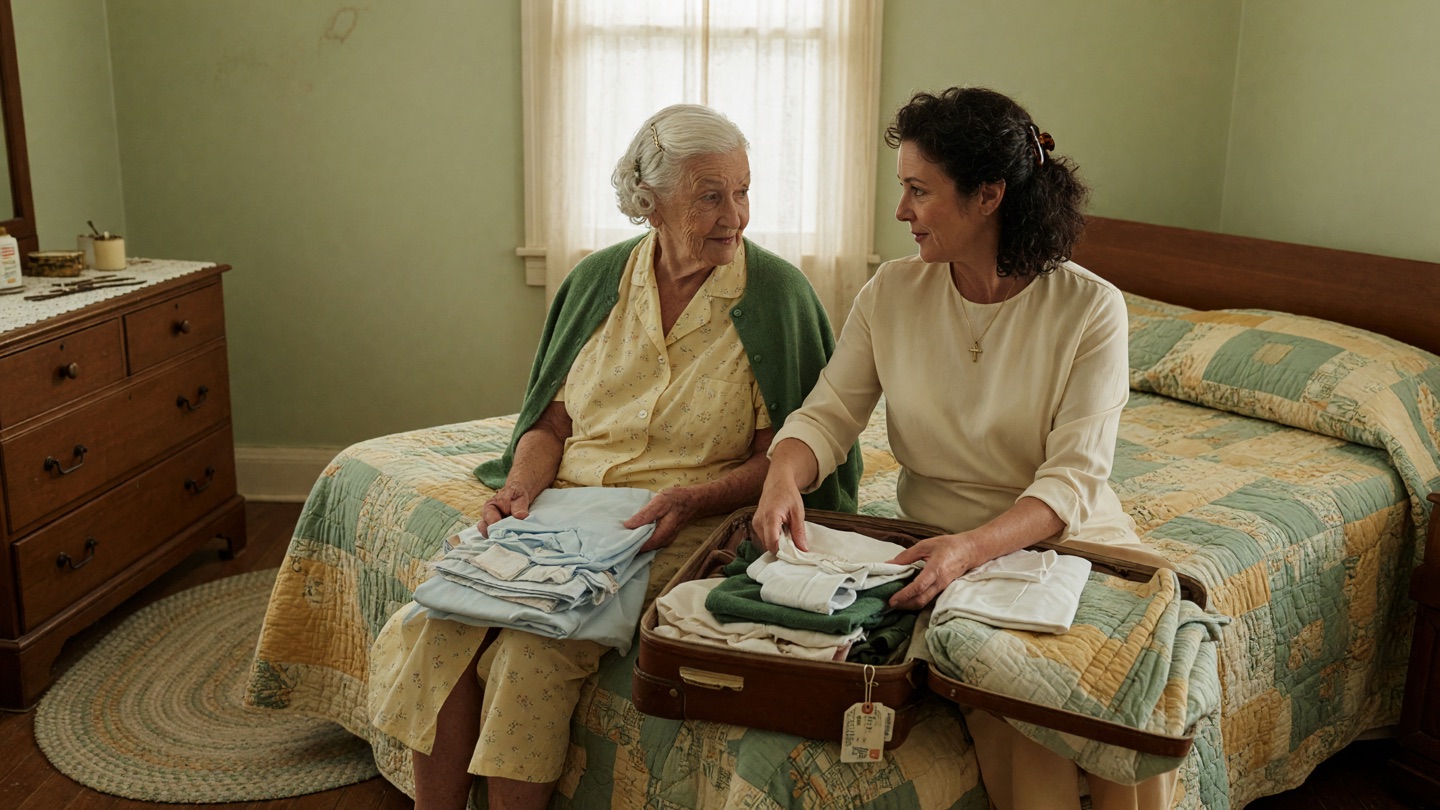
A calm, unhurried move usually goes better than a big announcement. Move at the time of day your parent is at their best, bring a few familiar things first, keep advance talk short, and let the staff learn who they are. In Louisiana, memory care is a secured Alzheimer's Special Care Unit inside a licensed home.
You have already made the hardest decision. Now comes the day itself, and the fear that it will end in tears or a struggle at the door. It often does not, when the move is planned for calm rather than speed. This page is about the move itself: the timing, the familiar things, the honest debate over bending the truth, the first weeks, and how to hand your parent's story to the people who will care for them.
This article is general education, not medical advice, and it cannot assess anyone. Only a licensed clinician can evaluate your parent and confirm the right level of care. Do not start, stop, or change any care based on this article. Talk with your parent's doctor and the community's care team.
What is the gentlest way to move a parent with dementia?
The gentlest moves are quiet, planned, and led by one trusted person. Skip the long build-up, choose your parent's calmest hour, and keep the day simple and warm. Let their new room be set up before they arrive, and lean on the memory care staff, who do this every week. The goal is not to win an argument. It is to lower fear.
A move can feel like a betrayal to plan and a relief to finish. Both feelings are normal. Remember that a parent with dementia takes their emotional cue from you, so the tone you carry into the day matters as much as any single step. Steady, warm, and unhurried beats fast and efficient every time.
When on moving day should we actually make the move?
Move during the window when your parent is calmest, usually the morning. Many people with dementia grow more anxious and confused in the late afternoon and evening, a pattern called sundowning, so an early arrival gives them daylight hours to settle before night. Avoid rushed, chaotic, or overtired moments (A Place for Mom).
One approach many families use is to set up the room in advance while your parent spends the morning somewhere pleasant with another relative, then bring them to a room that is already furnished and familiar rather than a pile of boxes. Others prefer to arrive together and stay through lunch so the first meal happens with a familiar face nearby. There is no single right script. Pick the version that fits your parent and keeps the day low-key.
Is it okay to bend the truth about the move? (the therapeutic fibbing debate)
Sometimes, yes, and it is a real debate among families and clinicians. When the plain truth causes fear or agitation, many experts support gentle fiblets: meeting your parent in their reality rather than correcting them. It is not the first move, though. Try acknowledging the feeling, reassurance, and redirection before a comforting fib (DailyCaring).
This is one of the hardest parts for honest families, because it can feel like lying to someone you love. It helps to know that dementia can make the literal truth both unreachable and painful. Correcting a parent who believes they are going home tomorrow can trigger a stress response that makes agitation worse, while a person who feels calm and safe copes far better. The Alzheimer's Association itself describes using fiblets to make the first hours and days of a move less harsh, for example framing it as a place to rest and get a little help rather than emphasizing that they can no longer live alone (Alzheimer's Association; A Place for Mom).
The table below shows the three approaches families weigh, from most literal to most protective. Most days you will live in the middle row.
| Approach | What it means | When it tends to help |
|---|---|---|
| Reality orientation | Correcting your parent with the facts, such as the date, that a spouse has passed, or that this is now their home | Rarely, and mostly in early dementia, only when it does not cause distress |
| Validation and redirection | Acknowledging the feeling behind what they say, then gently guiding to a calmer subject or activity | Most of the time; this is the recommended first response |
| Therapeutic fibbing | A gentle, caring untruth that fits their reality when the plain truth would frighten or agitate | When validation and redirection have not worked and comfort or safety is at stake |
A simple rule keeps this kind: fib to comfort, never to control. If a small untruth spares your parent fear they cannot resolve, most clinicians consider it compassionate care. If it exists only to make your day easier, pause and try validation and redirection first.
What should we pack to make the new room feel like home?
Bring a few meaningful things rather than everything at once. Familiar possessions lower anxiety, while a crowded room can overwhelm. Think of their favorite chair, a well-loved quilt or bedding, framed family photos, a bedside lamp, and music they love. Recreating a familiar layout helps the space feel known, not new.
Keep the room recognizable, not perfect. If the armchair always sat to the right of the bed at home, put it there. Familiar smells, a favorite blanket, and a small playlist of the music your parent grew up on can settle a room faster than new furniture ever could. Add more over the following weeks once you see what they reach for.
Move-day checklist
- Pick the calm hour, usually the morning, and keep the whole day unhurried.
- Set up the room in advance, ideally while your parent spends the morning with someone they trust.
- Bring a few familiar items first: a favorite chair, bedding, photos, a lamp, and music.
- Label belongings, including clothing and glasses, so nothing gets lost in the first busy days.
- Keep advance discussion short and reassuring, and do not over-explain the move.
- Agree with staff on a simple, consistent story for the first hours and days.
- Plan one calm goodbye rather than a long, tearful farewell, and let staff take it from there.
- Ask the staff how and when they suggest you visit next.
How long does it take to settle in, and should we stay away at first?
Settling in can take days, weeks, or a few months; there is no single timeline. Whether to visit right away is genuinely debated. Some communities suggest a short pause so routines can form; others welcome frequent early visits. The honest answer: follow this community's guidance and your parent's cues (Family Caregiver Alliance; The Arbor Company).
Expect some early confusion or upset. It is normal, and it usually does not mean you chose wrong. When you do visit in the first weeks, shorter and calmer often beats long and emotional, because a drawn-out visit or a hard goodbye can reset the adjustment. Ask the staff how your parent does after you leave, and let their answer, not your guilt, shape how often you come. If a visit consistently leaves your parent distressed for hours, the team can help you find a gentler rhythm.
How do we work with the memory care staff?
Give the staff the person, not just the patient. Share your parent's life story, routines, nicknames, food they love, what soothes them, and what sets them off. In Louisiana, any home advertising dementia care must give you an Alzheimer's Special Care Unit disclosure describing its philosophy, training, and admission and discharge rules (Louisiana Department of Health; ALFBoss).
A short written profile helps every caregiver on every shift: who your parent was and is, their work and family, their faith, their daily habits, the words or approaches that calm them, and the ones that trigger fear. Tell them practical things too, like that your mother wanders most before dinner, or that your father resists bathing but relaxes with music. Ask for a care conference in the first weeks, and treat the staff as partners you will keep talking to, not strangers you handed a problem. Wandering is common, so ask directly how the unit keeps residents safe: about 6 in 10 people living with dementia wander at least once (Alzheimer's Association).
Where can Louisiana families get help with a dementia move?
You do not have to figure this out alone. The Alzheimer's Association 24/7 Helpline, 800-272-3900, serves all 64 Louisiana parishes with free guidance in more than 200 languages. In the Baton Rouge area, Alzheimer's Services of the Capital Area runs Charlie's Place, a certified adult day and respite program (Alzheimer's Association Louisiana; Alzheimer's Services of the Capital Area).
- Alzheimer's Association Louisiana, 24/7 Helpline: 800-272-3900 · alz.org/louisiana · free, confidential, more than 200 languages, all 64 parishes.
- Alzheimer's Services of the Capital Area (Baton Rouge, East Baton Rouge Parish): 225-334-7494 · alzbr.org · runs Charlie's Place adult day and respite center and offers caregiver support.
A quick note on money as you plan, because a move has a cost. Louisiana does not survey memory care as its own category, but estimates put it roughly $5,500 to $6,500 a month, usually a few hundred to about a thousand dollars above assisted living (CareScout 2025 Cost of Care Survey). Treat that as a range to confirm with each community, not a fixed price. Louisiana carries a heavy dementia load, with an estimated 94,700 residents 65 and older living with Alzheimer's, so you are far from the only family walking this road (Well-Ahead Louisiana).
How a Louisiana advisor helps
You do not have to plan this day by yourself. A Louisiana senior advisor can help you time the move, choose a memory care home whose Special Care Unit truly fits your parent, and prepare both the room and the staff handoff so the first hours are calm. You work with one advisor who stays with you, never a call center that sells your family's details to a list of communities.
Good guidance covers more than a move to a community. In-home care, adult day programs, and respite all stay on the table, and if staying home a little longer is the better answer, your advisor will say so. When it helps, your advisor can prepare a MyCare Recommendation to guide the next step and point you to the local resources above. Families pay nothing for this help. Whether you are in Orleans, East Baton Rouge, Jefferson, or St. Tammany Parish, reach out when you want a calm second set of eyes.
This article is general education for Louisiana families, not medical, legal, or financial advice. Cost figures are estimates that vary by source, community, and year, so confirm them directly with each provider. Only a licensed clinician can assess your parent and confirm the right level of care, and dementia progresses differently for everyone. Do not start, stop, or change any care based on this article. Talk with your parent's doctor.
Common questions from Louisiana families
Should I tell my parent with dementia that the move is permanent?
Not usually all at once. A long explanation of a permanent move can cause fear your parent cannot hold onto, and correcting them can make it worse. Keep it short and reassuring, focus on the next hour, and use gentle fiblets if the full truth causes real distress. Comfort matters more than making them accept the facts.
What is therapeutic fibbing in dementia care?
Therapeutic fibbing means gently bending the truth to fit your parent's reality when the plain facts would cause needless fear or agitation. Experts treat it as a comfort tool, not a first response. Try acknowledging the feeling, reassurance, and redirection first, and use a kind fib only when it protects your parent's wellbeing or safety.
How soon should I visit after moving my parent to memory care?
It depends on your parent and the community, and it is genuinely debated. Some communities suggest a short pause so new routines can form, while others welcome frequent early visits. Ask the staff what they see working, keep the first visits short and calm, and adjust from there rather than following one fixed rule.
What should I bring on the first day?
A few meaningful items, not a full household. A favorite chair, familiar bedding, framed photos, a bedside lamp, and music your parent loves help a new room feel known. Start small to avoid overwhelm, label belongings so they are not lost, and add more over the following weeks as your parent settles in.
Is memory care its own license in Louisiana?
No. Louisiana has no standalone memory care license. Dementia care is provided as a secured Alzheimer's Special Care Unit inside a licensed Adult Residential Care Provider, or inside a nursing home's specialized unit. Any home marketing dementia care must give you a written Alzheimer's Special Care Disclosure describing its training, staffing, and setting.
Common questions
Should I tell my parent with dementia that the move is permanent?
Not usually all at once. A long explanation of a permanent move can cause fear your parent cannot hold onto, and correcting them can make it worse. Keep it short and reassuring, focus on the next hour, and use gentle fiblets if the full truth causes real distress. Comfort matters more than making them accept the facts.
What is therapeutic fibbing in dementia care?
Therapeutic fibbing means gently bending the truth to fit your parent's reality when the plain facts would cause needless fear or agitation. Experts treat it as a comfort tool, not a first response. Try acknowledging the feeling, reassurance, and redirection first, and use a kind fib only when it protects your parent's wellbeing or safety.
How soon should I visit after moving my parent to memory care?
It depends on your parent and the community, and it is genuinely debated. Some communities suggest a short pause so new routines can form, while others welcome frequent early visits. Ask the staff what they see working, keep the first visits short and calm, and adjust from there rather than following one fixed rule.
What should I bring on the first day?
A few meaningful items, not a full household. A favorite chair, familiar bedding, framed photos, a bedside lamp, and music your parent loves help a new room feel known. Start small to avoid overwhelm, label belongings so they are not lost, and add more over the following weeks as your parent settles in.
Is memory care its own license in Louisiana?
No. Louisiana has no standalone memory care license. Dementia care is provided as a secured Alzheimer's Special Care Unit inside a licensed Adult Residential Care Provider, or inside a nursing home's specialized unit. Any home marketing dementia care must give you a written Alzheimer's Special Care Disclosure describing its training, staffing, and setting.
Where this comes from
- Alzheimer's Association: Wandering (6 in 10 statistic, warning signs)
- Alzheimer's Association: Alzheimer's Disease Facts and Figures (2025)
- Alzheimer's Association Louisiana Chapter (24/7 Helpline, programs, 64 parishes)
- Alzheimer's Association: 24/7 Helpline
- A Place for Mom: Easing the Transition to Memory Care (fiblets, move-in tips)
- Family Caregiver Alliance: Residential Care Options, Visiting Someone in Dementia Care
- The Arbor Company: How Long Should It Take to Adjust to a Dementia Care Community
- DailyCaring: Therapeutic Fibbing, Why Experts Recommend It
- Louisiana Department of Health, Health Standards Section: ARCP codified rules (LAC Title 48, Part I, Chapter 68)
- ALFBoss: Specialized Dementia Care Programs and ASCU disclosure requirements
- CareScout 2025 Cost of Care Survey (data released March 2026)
- Alzheimer's Services of the Capital Area (Baton Rouge, Charlie's Place respite)
- Well-Ahead Louisiana: Alzheimer's and Dementia in Louisiana (state figures)